
Car Overheating on the Road: Causes, What to Do and When to Call for Help
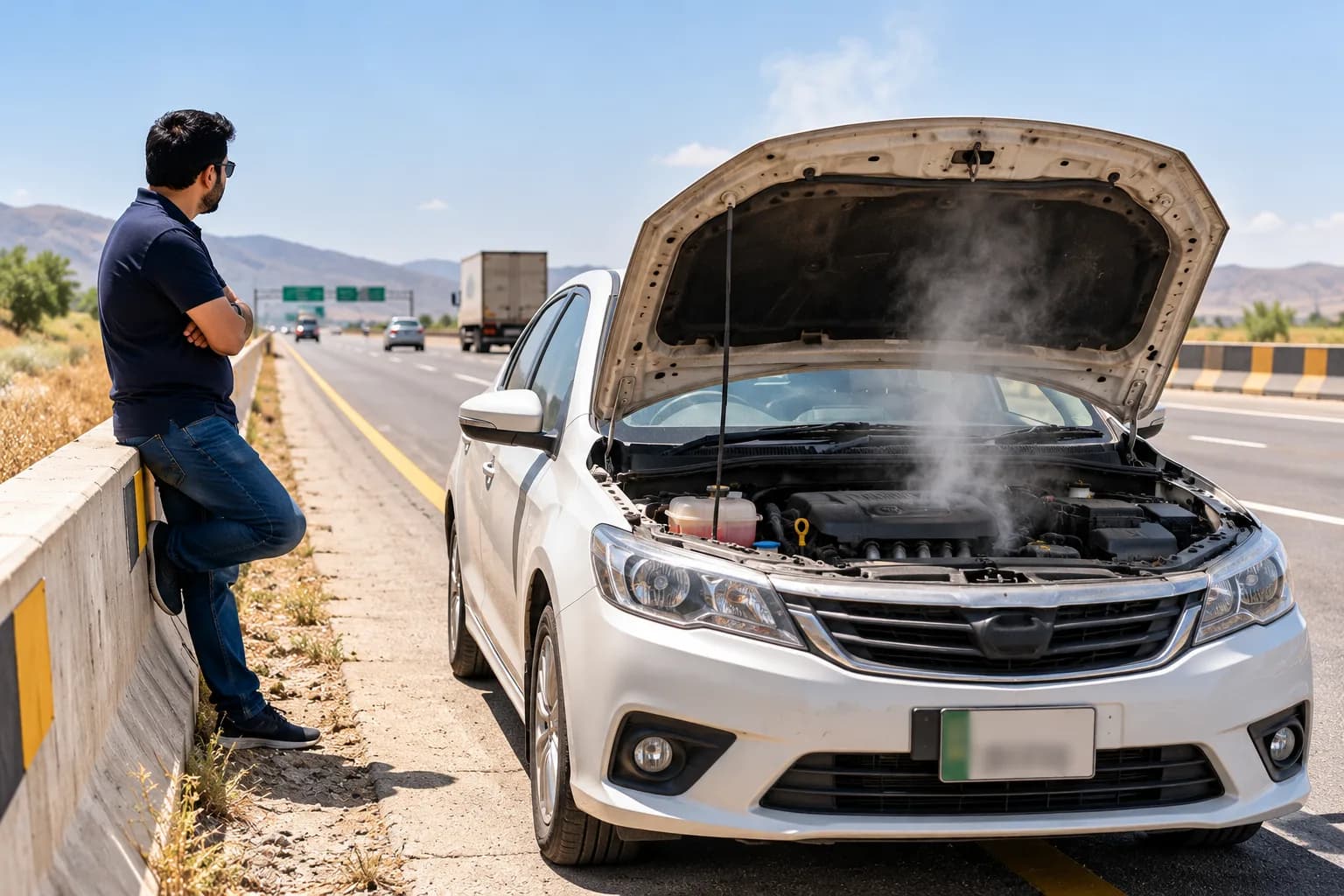
You are driving on a hot afternoon, the AC is running, and suddenly you notice the temperature needle climbing towards red. Maybe there is steam coming from under the bonnet, or a warning light has just come on. Car overheating on the road is one of the most common problems drivers face in Pakistan, especially when summer temperatures cross 45°C in cities like Multan, Jacobabad, Sukkur and Lahore.
The good news is that an overheating engine does not have to turn into an expensive repair, as long as you react the right way. In this guide, we explain why cars overheat, what to do the moment it happens, what you should never do, and when it is time to call for professional roadside help.
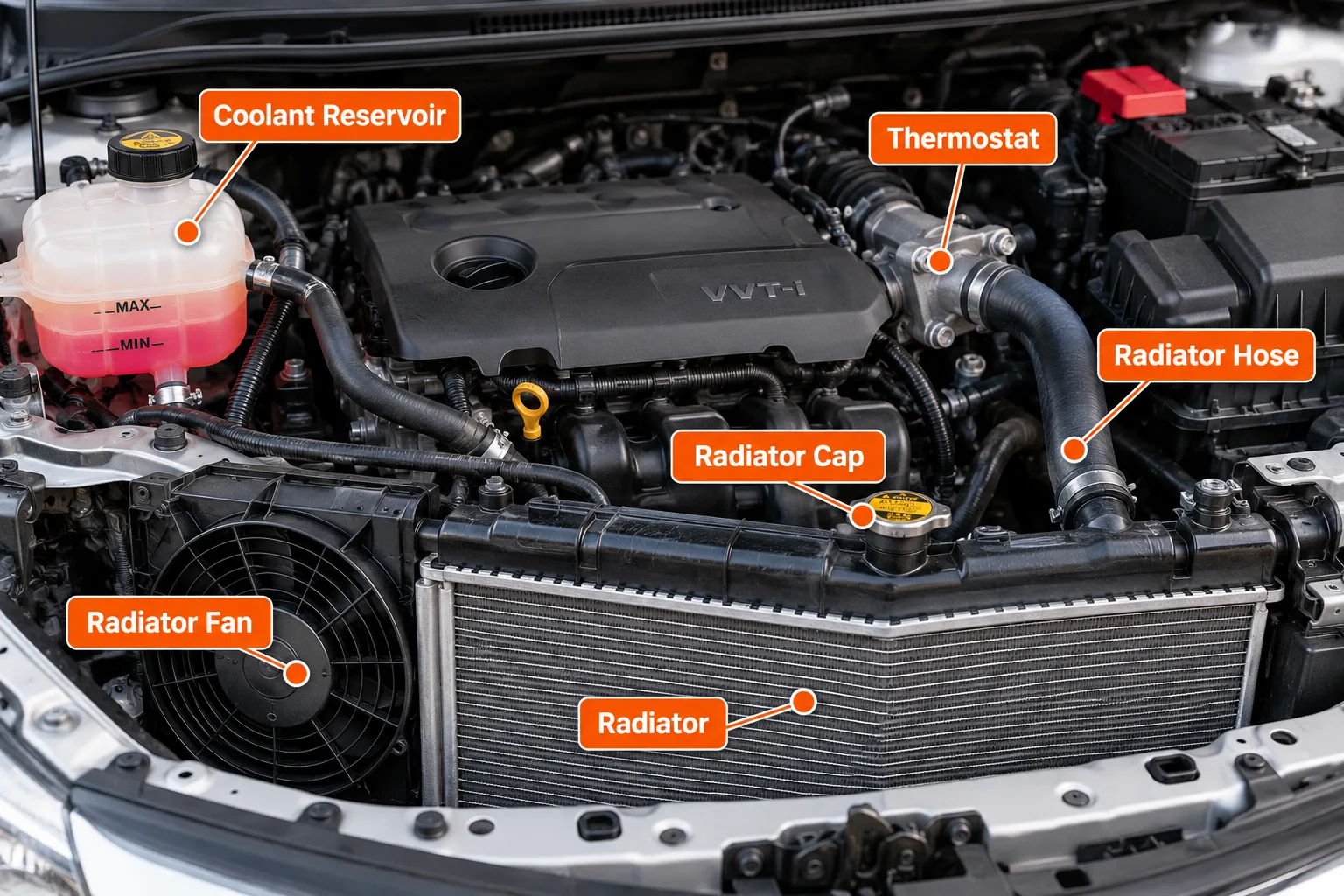
Why Do Cars Overheat?
Your engine produces a huge amount of heat. The cooling system, which includes the radiator, coolant, water pump, thermostat and radiator fan, carries that heat away and keeps the engine at a safe temperature. When any part of this system fails, the engine temperature rises quickly. These are the most common causes:
1. Low or Leaking Coolant
Coolant is the liquid that absorbs heat from the engine. If the level is low because of a leak in a hose, the radiator or the water pump, there is simply not enough liquid to cool the engine. Many drivers in Pakistan also top up with plain water for years, which leads to rust and scale inside the system.
2. Faulty Thermostat
The thermostat is a small valve that controls when coolant flows to the radiator. If it gets stuck in the closed position, coolant cannot circulate and the engine heats up within minutes.
3. Radiator Fan Not Working
In slow city traffic there is little air flowing through the radiator, so the electric fan does the cooling. A blown fuse, a faulty fan motor or a bad sensor means the car may be fine on the motorway but overheat in traffic jams.
4. Blocked or Damaged Radiator
Dust, mud, insects and the scale from tap water can clog the radiator, both inside and outside. A blocked radiator cannot release heat properly, which is a very common problem on dusty roads.
5. Water Pump Failure
The water pump pushes coolant around the engine. When its bearing or impeller wears out, circulation slows down or stops. A leak or a whining noise from the front of the engine is often an early warning sign.
6. Broken Belt or Hose
Rubber belts and hoses get hard and crack in extreme heat. A burst hose can empty the coolant in seconds, and a broken belt can stop the water pump on many cars.
Warning Signs Your Car Is Overheating
Catching the problem early is the best way to avoid serious engine damage. Watch out for these signs:
- The temperature gauge moves above the middle or towards the red zone
- A red or orange temperature warning light appears on the dashboard
- Steam or white smoke comes from under the bonnet
- A sweet smell, which usually means coolant is leaking
- The AC suddenly blows warm air or the engine loses power
- A ticking or knocking sound from the engine
What to Do When Your Car Overheats on the Road
If you notice any of the signs above, stay calm and follow these steps:
- Turn off the AC immediately. This removes extra load from the engine.
- Turn the heater on full with the fan at maximum. It feels uncomfortable, but it pulls heat away from the engine and can buy you a few extra minutes.
- Find a safe place to stop. Move to the hard shoulder or a safe roadside area, switch on your hazard lights and turn off the engine.
- Get out and stand in a safe place. On a motorway or highway, stand behind the barrier, away from moving traffic.
- Wait at least 30 minutes before touching anything. The engine and radiator are extremely hot.
- Check the coolant level only when the engine is fully cool. Look at the reservoir tank and top it up with coolant if you have some.
- Look for visible leaks under the car, such as green, pink or orange liquid on the ground.
- If the temperature rises again as soon as you restart, do not keep driving. Call for help.
What You Should Never Do
- Never open the radiator cap while the engine is hot. Pressurised boiling coolant can spray out and cause serious burns.
- Never pour cold water on a hot engine. The sudden temperature change can crack the engine block or cylinder head.
- Never keep driving with the needle in the red. A few extra kilometres can cause a blown head gasket or a seized engine, which is a very expensive repair.
- Never ignore an overheating car that "seems fine" after cooling down. The problem that caused it is still there.
How to Prevent Car Overheating in Pakistan's Heat
Most overheating problems can be avoided with simple, regular care, especially before summer and before long journeys:
- Use proper coolant instead of plain water, and flush the system as your car's manual recommends.
- Check the coolant level every week during summer, when the engine is cold.
- Have the radiator cleaned, especially if you often drive on dusty roads.
- Ask your mechanic to check hoses, belts and the radiator fan at every service.
- Keep an eye on the temperature gauge, particularly in traffic and when climbing hills.
- Avoid long drives in the hottest hours of the afternoon when possible.
When to Call for Professional Roadside Help
Some overheating problems can be handled after the engine cools down, but many cannot. Call for help if the temperature rises again after topping up, if you see a major leak, if a hose has burst, if the fan has stopped working, or if you simply do not feel safe checking the car yourself on a busy road.
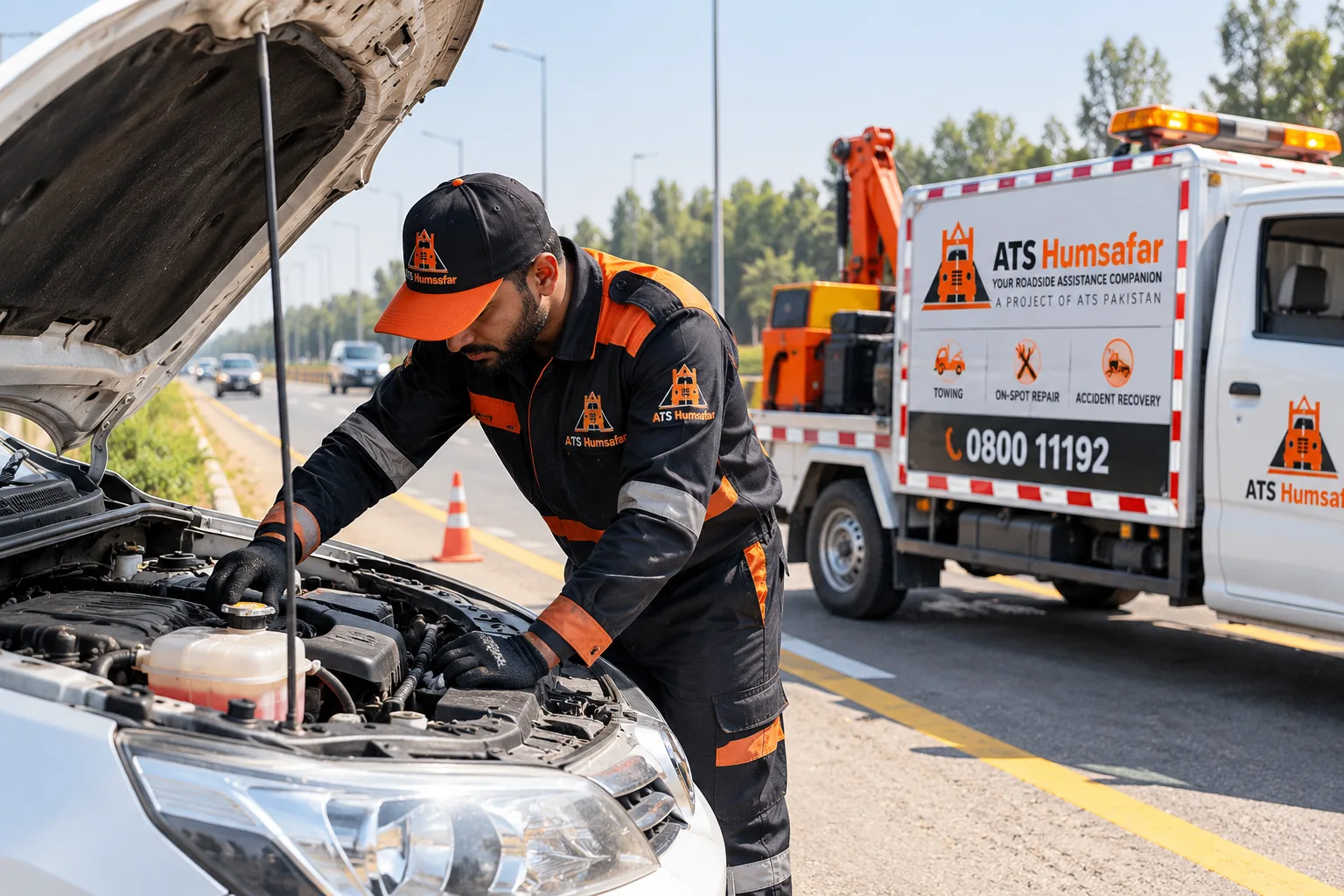
This is exactly where ATS Humsafar helps. Our trained technicians can diagnose the mechanical fault and fix it on the spot where possible. If the car needs a workshop, we tow it safely so you do not risk damaging the engine by driving further. If required, we can also arrange an alternate vehicle so your journey does not have to stop.
Frequently Asked Questions
Can I drive my car if it is overheating?
It is not recommended. Driving with an overheating engine can cause serious and expensive damage. Pull over safely, let the engine cool down and call for help if the problem continues.
How long should I wait before opening the bonnet?
Wait at least 30 minutes. Never open the radiator cap until the engine is completely cool.
Can I use water instead of coolant?
In an emergency, clean water can help you reach a workshop, but it should be replaced with proper coolant as soon as possible because water alone can cause rust and scale over time.
Car Overheating? We're Just One Call Away
Don't risk your engine on the roadside. ATS Humsafar's trained crews are available 24/7 across Punjab, Sindh, Balochistan and KPK for on-spot mechanical repair, safe towing and alternate vehicle arrangement if required.
- Call now: 0800-11192
- WhatsApp: +92 324 1111612
- Request help through the ATS World app (Google Play & App Store)
Stranded right now? Don't read the rest of the blog, call or message us.